Features
Why 1980s Mecha Still Looks Like the Future
Written by Zero Variant · Published
Stand a VF-1 Valkyrie up in Battroid mode and look at what it is standing on. Its legs are the engine nacelles. Its feet are the exhaust nozzles. The heaviest parts of the aircraft have not been swapped out for robot parts that were hiding somewhere. They have been rotated into a new orientation and given a second job. You can still read what each one used to be.
That is a small thing to notice, but it is most of the reason a certain kind of 1980s Japanese mecha still looks like the future rather than like 1985. Not because anybody predicted anything. Because the designers built these machines out of hardware that already existed, then left the joins where you could see them.
This is an argument about particular designs, not about a decade. Plenty of 1980s mecha looks nothing like this, on purpose, which is worth coming back to. First, three lines that repay a close look.
Macross: the engines become the legs
The VF-1 Valkyrie was designed by Shoji Kawamori, with contributions from his Studio Nue colleague Kazutaka Miyatake, between 1980 and 1982 for The Super Dimension Fortress Macross. Its ancestry was never a secret. The McDonnell Douglas F-15 Eagle and the Grumman F-14 Tomcat with its variable-sweep wing were the main inspirations. The fighter mode keeps a fuselage close to the F-14's, underslung intakes included. Even the name is borrowed from real aviation, the experimental XB-70 Valkyrie.
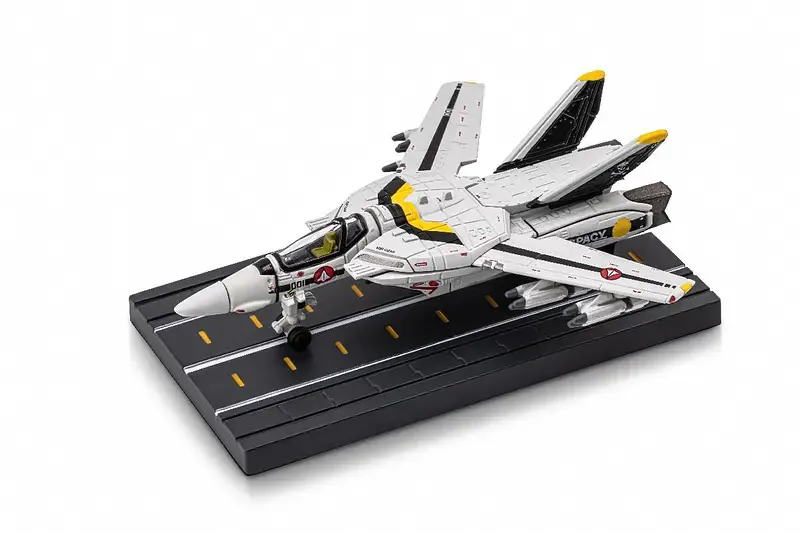
The hard part of any transforming aircraft is keeping it in decent proportion in both shapes. By Kawamori's account the part that would not behave was the arms. An early version ran them forward to meet at the front and form the nose, which left the aircraft looking too fat to pass as a plane. The answer turned up while he was handling a model of an F-14: between its two engine nacelles there is a gap. Fold the arms into that gap and the fuselage stays slim. That is the move the rest of the design is built out from.
Once the arms have somewhere to live, the nacelles are free for other work. They sit wide apart and run most of the length of the aircraft, which is a pair of legs already lying down. Swing them beneath the fuselage and the Valkyrie has something to stand on, with the two-dimensional exhaust nozzles where feet need to be. The nose that carried the cockpit becomes the chest, so the pilot stays in the part of the machine that took off. The wings sweep back to their stowed position rather than coming off.
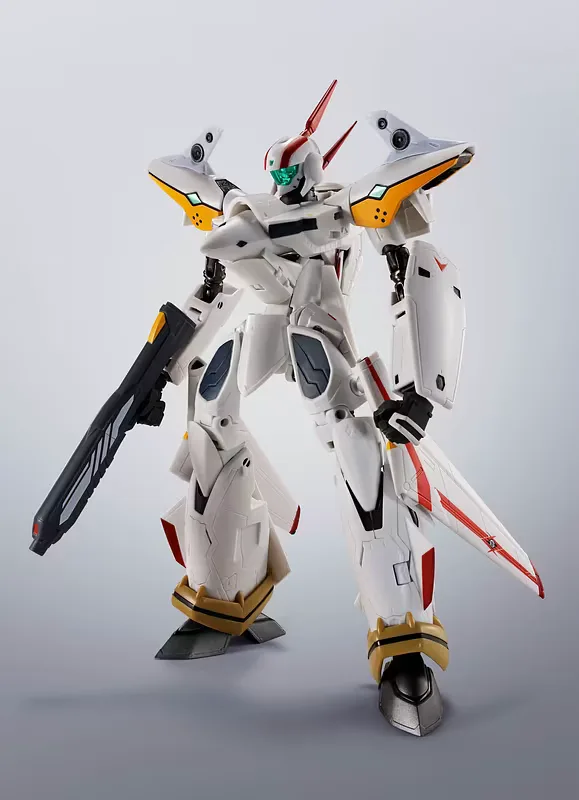
That is why the robot mode reads as hardware rather than as a costume. You can follow the big components from one shape to the other with your eye. Nothing had to be invented for the robot that was not already doing a job on the aircraft.
The head is the other tell. It is a sensor housing rather than a face, a deliberate break from the heroic expressions of the robots that came before. It carries instruments instead of a jaw, which is exactly why it has dated so slowly.
The third mode corrects any story about pure deduction. Kawamori and Miyatake had earlier sketched a non-transforming bird-like machine with reversed legs, worked up from watching ski jumpers crouch on a trip. Nothing came of it. Then, by the Macross Compendium's account of Kawamori's own recollection, Takatoku Toys handed him a prototype of the variable fighter whose joints had no locking mechanisms yet; its legs swung out and flopped into his lap. He said "Ah! Did that just become a Ga-Walk?" The acronym, Ground Effective Reinforcement of Winged Armament with Locomotive Knee-joint, was fitted around the result afterwards. Convincing machines can still be happy accidents.
You can judge how well the shape survives translation into metal on the ROBO-DOU VF-1S Super Veritech set, or at the other end of the size range on the Kids Logic Mini Metal VF-1S, where the aircraft has to hold up with none of the robot to distract you.
Diaclone: the pilot sets the scale
Two years before Macross, those same two designers were working on a related problem. Takara launched Diaclone in 1980, spun out of the Microman line, with Kawamori designing the machines and Miyatake the figures, both contracted from Studio Nue.
The defining idea was scale. Microman's figures were full-size toys of 10cm alien cyborgs. The Diaclone pilots represent ordinary adults at roughly 1/60, which puts them at around 3cm tall, with magnetic shoes so they could stand on the hull of a machine or drop into its cockpit.
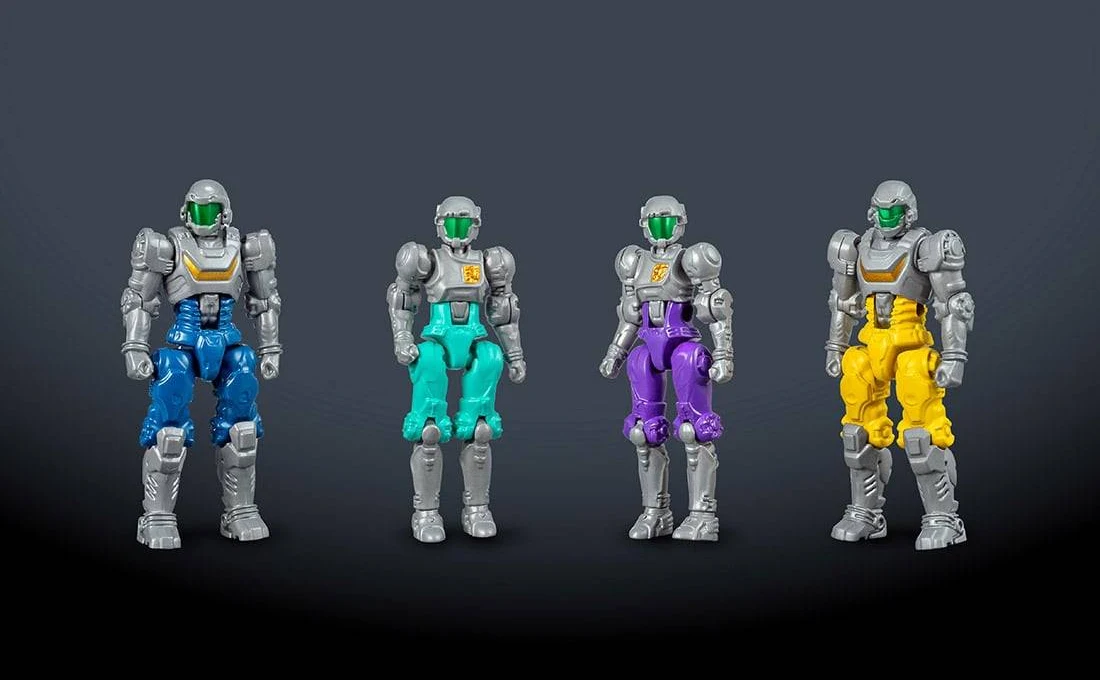
That constraint does far more design work than it looks like it should. A cockpit that has to hold a body is a fixed volume. The canopy has a minimum size, the hatch has to open somewhere a person could actually climb through, the chest has to be deep enough to swallow a seat. A robot drawn without a pilot can be whatever size the scene needs. A machine built around a 3cm figure cannot.
It also changes what you are looking at. Put a pilot on the hull and the machine stops being a character and becomes equipment: something a person walks up to, climbs into, operates and climbs out of again. The hatches, ladders, handholds and footplates that follow from that are the details collectors still point at forty years later.
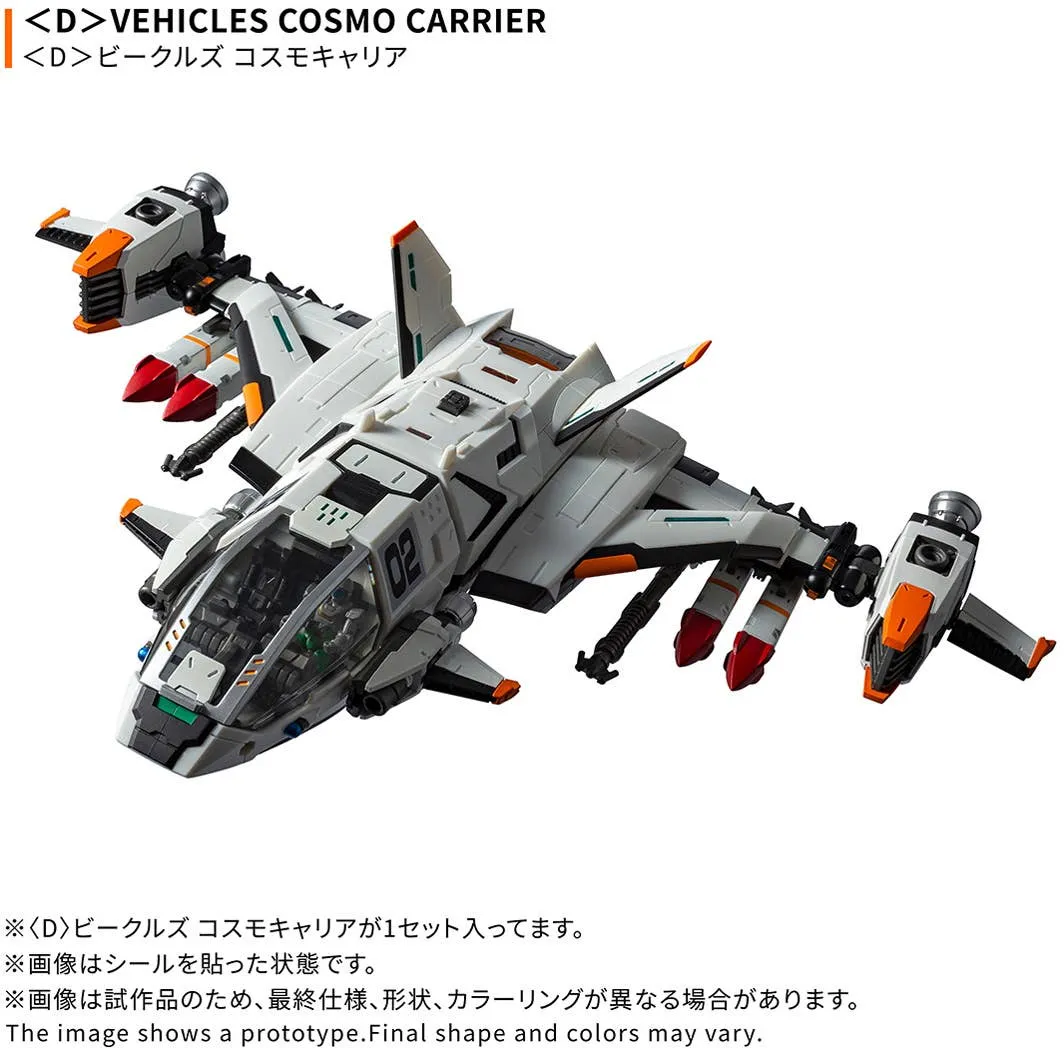
The rest of the story is well known. In 1984 Hasbro licensed these moulds along with Takara's Micro Change toys to create Transformers, with the pilots taken out, which is why a few early Transformers have cockpits that nobody sits in. The original line ran from 1980 to 1984. Takara Tomy announced the revival in 2015 and the first new release, Dia-Battles V2, followed in May 2016. That press release is also where the company states the new line keeps the original 1/60 scale. If you want the practical version of all this, our beginner's guide to Diaclone covers how the modern range fits together.
Patlabor: the machine needs a truck
Look at the AV-98 Ingram and the first thing worth noticing is what it is not carrying. No missile racks, no shoulder cannon. The revolver cannon lives in a bay inside its right leg. The shield rides on the left forearm with the stun stick stowed inside the shield itself. The hands have five fingers. This is a police vehicle before it is a robot. Yutaka Izubuchi designed it in 1988 for Headgear, the five-person collective behind Patlabor along with Masami Yuki, Mamoru Oshii, Kazunori Ito and Akemi Takada.
The restraint follows from the premise. Labors are construction machines, put to work on large-scale engineering projects. The police operate their own fleet because industrial machines inevitably produce industrial crime. The Ingram has a registration, a unit, a crew and a garage, which is a far more ordinary set of facts than most mecha get.
Then there is the detail that finishes the job, which is not on the robot at all. It is the labor carrier: a heavy truck and trailer that hauls the Ingram to the scene, stands it upright for deployment and keeps its power topped up. The machine does not walk to work. It gets delivered, like a crane. That is a different route to plausibility from Macross, where the Valkyrie convinces through its own internal logic, part by part. The Ingram convinces because the world around it has visibly adapted to owning one. It held up well enough that the later live-action production built full-scale 9-metre Ingrams and filmed them on real streets.
Patlabor did not invent this. Blue Gale Xabungle, from 1982, had already put its machines into civilian hands. Walker Machines are working equipment on a frontier world, hauling and digging as readily as fighting. They look the part: exposed hydraulics, riveted plate, cabs that could have come off a piece of heavy plant. Kunio Okawara designed them with mechanical design cooperation from Yutaka Izubuchi, who would draw the Ingram six years later. Xabungle gives its machines a mothership too, the Iron Gear, a land carrier that hauls them around, sold now as the Soul of Chogokin GX-38R.
The design keeps finding new bodies, too. The Zoids x Patlabor Ingram Mark III pushes the silhouette a long way while keeping it recognisably a working police machine.
What the convincing ones have in common
Look across the three and the same habits keep appearing.
- Borrowed grammar. Intakes, panel lines, latches, hydraulic runs and vents that look like they came out of a catalogue of parts that already exists. The eye recognises them before the brain asks any questions.
- Visible continuity. The big components can be traced from one mode to the other. This is a claim about legibility rather than engineering: the design shows you where each part went.
- A human reference. A cockpit, a seat, a hatch, a ladder. Something sized to a body, which fixes the size of everything else.
- Modesty about capability. These machines run out of power, break down, need towing and get outmatched. A design that admits limits is far easier to believe than one that does not.
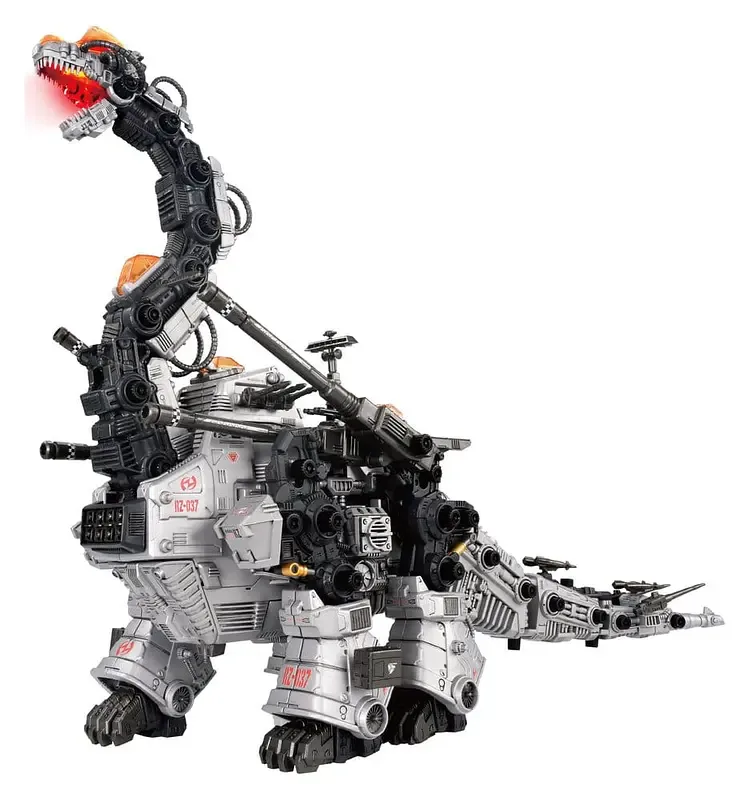
Zoids, launched in 1983, is the literal-minded version of all four. The line was built around working mechanisms, so many kits wind up or motorise and the model genuinely walks, with the linkages left on show instead of shrouded in armour. When the mechanism actually runs, nothing has to imply function.
None of this is engineering, which is worth being honest about. A 12.7-metre humanoid that folds into a jet fighter is not plausible and was never meant to be. These designs are not arguing that the machine works. They are arguing about how it would be handled: how you get in, where it sleeps, who tows it away when it breaks. That is a much easier argument to win. It also ages far better than a prediction.
The decade never had a single house style
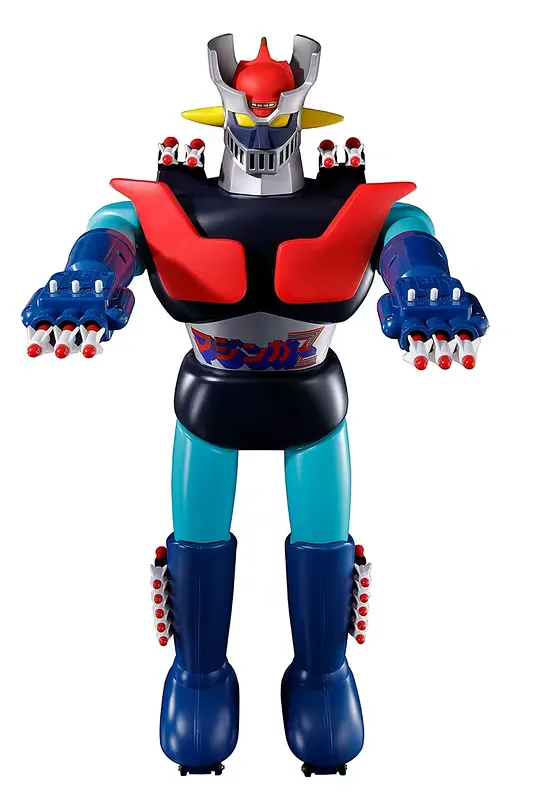
It would be easy to read all this as "1980s mecha was realistic". It was not. The same years gave us Golion in 1981 and Gunbuster in 1988, machines built for spectacle out of parts that have no business combining. These are not failed attempts at plausibility. They belong to the super robot tradition Mazinger Z began in 1972, which answers a different question: not where the machine is parked, but what it can do when it arrives. Asking it for a maintenance schedule would miss the point as badly as asking the Ingram to punch through a mountain.
Mamoru Nagano's Heavy Metal L-Gaim, in 1984, went somewhere else again: elongated and close to organic, with armour hung over an internal skeleton, an idea that outlived most of the hardware in this article. Even Macross does not hold one line, since the Zentradi pods the Valkyries fight have no aircraft heritage at all.
So the claim here is about a tendency rather than a rule. One strand of 1980s design chose to look like working equipment. That strand has aged unusually well.
Why it matters on a shelf
There is a practical reason all this still concerns collectors. A design whose parts are accounted for on paper gives a toy engineer somewhere to start, which is why these particular machines keep coming back at higher specifications instead of quietly retiring. It is never a clean translation. Transforming figures make their own compromises, in hollowed sections, hidden hinges and parts you swap rather than fold. A modern Valkyrie is an interpretation rather than a scale model of an impossible aircraft. What survives is the legibility: you can still see what each piece was doing a moment ago.
If you want to look at how the three lines handle it, start with Macross and Robotech for the Valkyries, Diaclone for the pilots and their machines, then Patlabor for the industrial end of the argument. Upcoming releases from all of them turn up on our preorders page as they open.