Features
What Makes a Super Robot
Written by Zero Variant · Published
Go Nagai was stuck in traffic. The light ahead had turned green but the junction was jammed and nothing could move. By his own account, what he wanted in that moment was a car that could stand up and step over the cars in front. A machine you sit inside and drive, only much bigger than a car.
That is roughly where Mazinger Z came from. Before it, the famous giant robot in Japan was Tetsujin 28-go, steered by a boy with a remote control from the ground. Mazinger put the boy inside. That one change set up half a century of machines built on the same promise: a person climbs in and the machine becomes them, only enormous.
Our feature on 1980s mecha followed the designers who made their robots look like working equipment. This is the other tradition, the one that never asked where the robot was parked. It asked what the robot could do when it arrived.
Mazinger Z
Mazinger Z began as a manga in Weekly Shonen Jump in October 1972, with the anime following on Fuji TV that December. Koji Kabuto flies a small craft, the Hover Pilder, into the robot's head and docks it there as the cockpit. The first version of the idea had him riding a motorbike up the robot's back. His editor steered him away from bikes because Kamen Rider already owned them, so the bike became a hovercraft.
Look at what the robot does once Koji is aboard. Its fists fly off as the Rocket Punch. Its chest plate fires a heat ray. Its mouth vents a corrosive gale. Every weapon is a part of the body and every attack has a name that gets shouted on screen. None of that is meant to be engineering. It is meant to be remembered, by a child, the next morning.
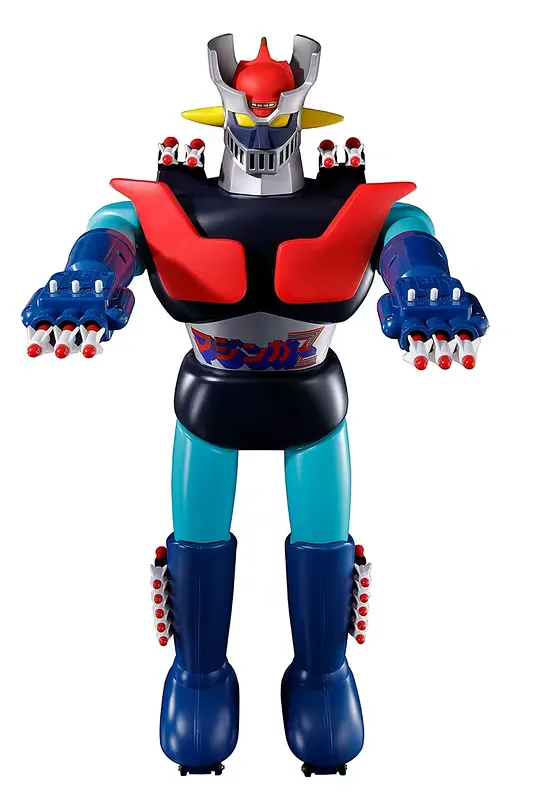
Remembered and bought. Popy, Bandai's character toy company, released a Jumbo Machinder Mazinger Z in 1973: around 60cm of hollow plastic, far bigger than anything else on a toy shelf. A die-cast line followed in 1974, starting with a small Mazinger Z numbered GA-01. Popy called it Chogokin, "super alloy", after the fictional metal Mazinger is built from, so that a child holding it could believe it was made of the same stuff. Both formats are still around. Tamashii Nations makes Jumbo Machineders today and Soul of Chogokin carries the die-cast name forward, which our Soul of Chogokin guide covers in depth.
The design never went away either. The Vinyl Archives Project soft vinyl set goes back to the 1970s look. The Scene Selection Rocket Punch freezes the most famous attack in the genre mid-flight.
Mazinkaiser
Mazinkaiser is what happens when the tradition looks back at itself. Banpresto asked Go Nagai for a new machine for Koji in the Super Robot Wars games. He answered with Mazinger Z turned up as far as it would go: bigger wings, longer horns, more weapons. Fans took to it so quickly that it got its own OVA in 2001. It is a super robot about super robots, made by and for people who grew up with the original.
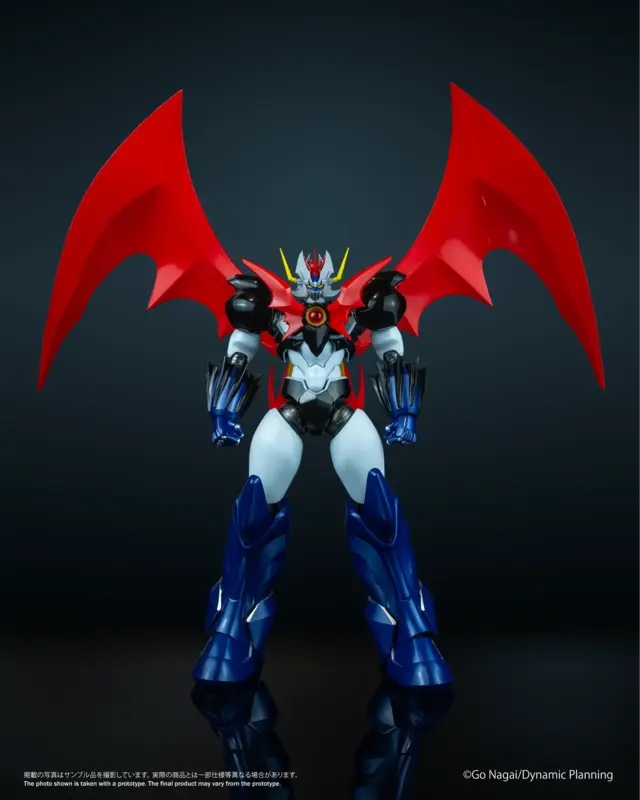
The Ember Toys BLAZE figure shows how far the toy side has come since GA-01. The chest lights up. Both forearms spin under their own motors for the Turbo Smasher Punch. The wings make it around 39cm tall. The idea is still Popy's from 1974: a toy that does the thing the robot does on screen.
Getter Robo
Getter Robo arrived in April 1974 and added the next big idea. Three pilots fly three jets that combine into a robot. Combine them in a different order and you get a different robot. Getter-1 flies, Getter-2 is fast with a drill for an arm and Getter-3 is the heavy one built for water.
It is usually filed as a Go Nagai series, but the manga was drawn and largely developed by Ken Ishikawa. Nagai helped with the early planning and with the designs for Getter-2 and Getter-3. Ishikawa took the story somewhere much darker over the decades that followed. The Getter Rays that power the machines grew into something close to a cosmic force.
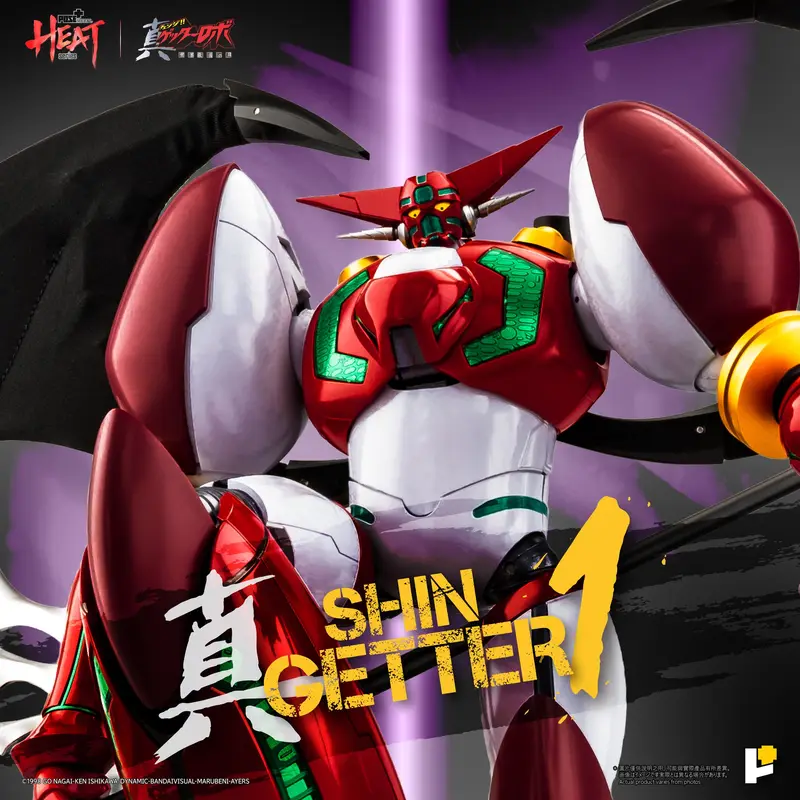
The 1998 OVA Getter Robo Armageddon brought that darker version to animation, with the Shin Getter machines leading. POSE+ has built all three in its METAL HEAT die-cast line: Shin Getter-1, Shin Getter-2 and Shin Getter-3.
Gaiking
Gaiking, from 1976, gave its robot a home that was also part of its body. The Daiku Maryu is a dragon-shaped carrier ship. When Gaiking launches, the dragon's head becomes the robot's chest, which is why Gaiking wears a skull across its torso. The ship sends out the other parts to join it.
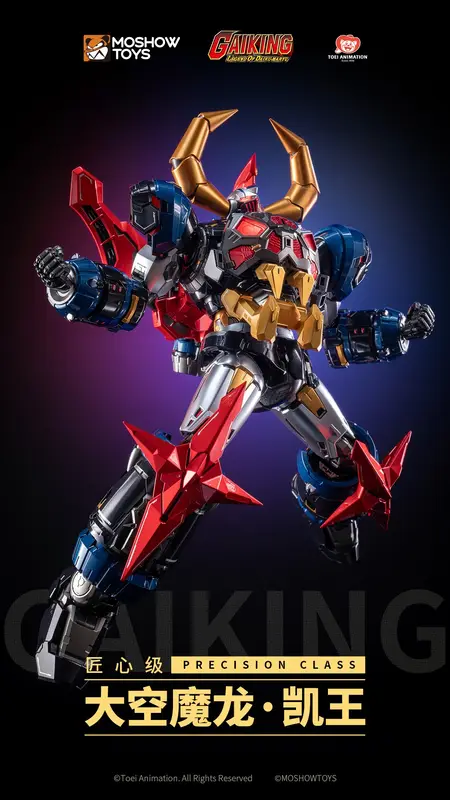
The design came back in 2005 with Gaiking: Legend of Daiku-Maryu. MOSHOWTOYS' Precision Class figure is based on that version, in alloy and plastic at around 25cm.
Daimos
By 1978 the genre was ready to be about people as well as punches. Tosho Daimos, directed by Tadao Nagahama, was the third series in a run often called the Romance Trilogy after Combattler V and Voltes V. Its hero Kazuya Ryuzaki falls for a woman from the invading side. The war keeps getting in the way.
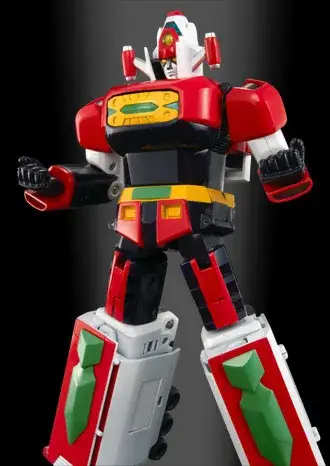
The robot itself is a fighter in the most literal sense. Kazuya is a karate champion and Daimos copies the moves of his body, so the robot fights the way he does. It also turns into a truck.
Mach Baron and Gold Lightan
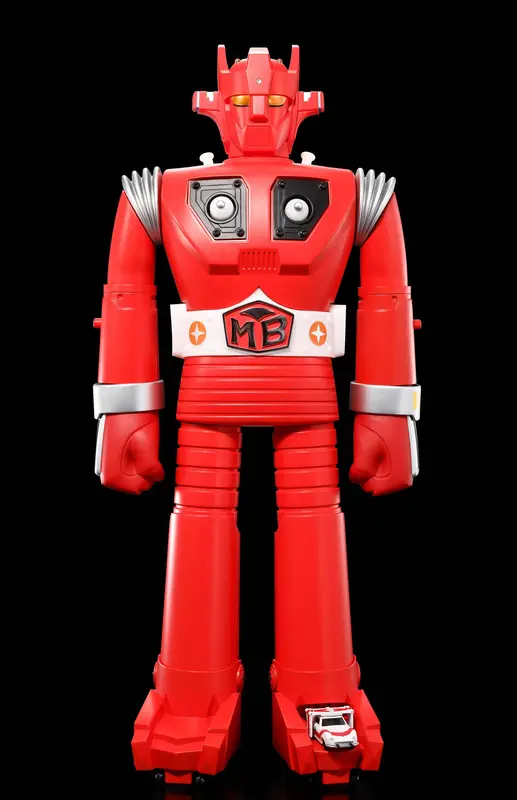
Not every super robot was animated. Super Robot Mach Baron, from 1974, was a live-action series on Nippon TV with a performer inside a full-size suit, following Super Robot Red Baron the year before. Its square red body and wide face plate are pure 1970s toy design, which is why it suits the Jumbo format so well.
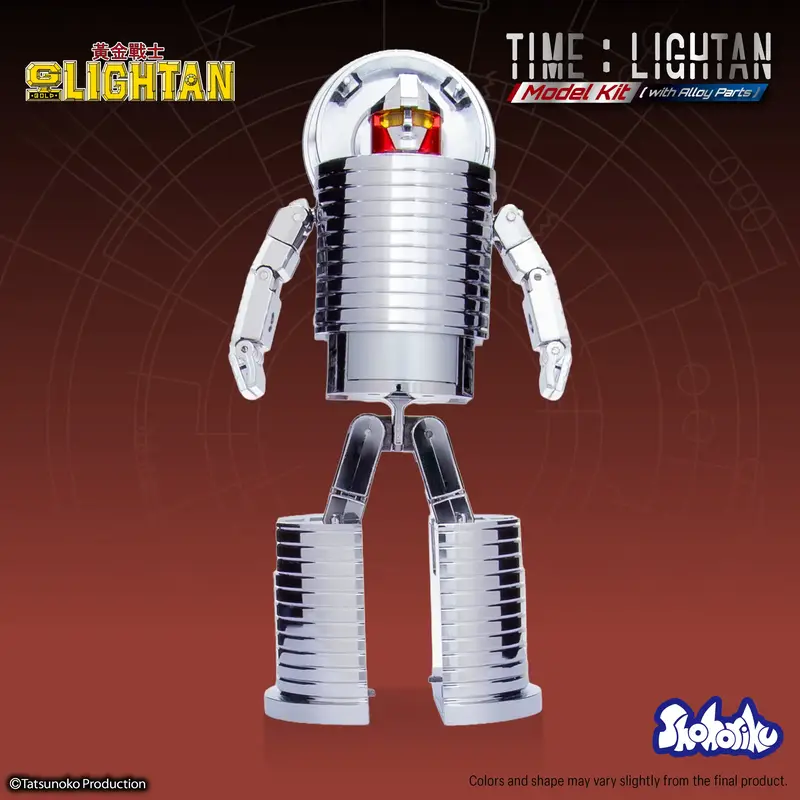
Gold Lightan, from Tatsunoko in 1981, drops the pilot altogether. A boy finds a gold lighter that turns out to be a 30-metre robot. The Lightans think for themselves and no one sits inside them. The series was popular in Hong Kong as well as Japan. The gold and chrome finish is the whole look, which is why a modern kit mixes metal into the build.
What makes a super robot
Look across all of these and the same habits keep turning up.
- A face. Eyes, a mouth guard, sometimes a scowl. The robot is a character, not a vehicle with a sensor where a head should be.
- Weapons that are body parts. Fists that fly, chest plates that fire, horns that cut. Nothing is carried that could be put down and forgotten.
- Names that get shouted. Every attack has one. Half the fun of the toy is saying it.
- Combination and transformation as spectacle. Getter's three machines, Gaiking's dragon, Daimos turning from truck to fighter. It happens because it looks great, not because it is efficient.
- Flat, loud colour. Red, blue, yellow, black. These robots were designed to read from across a playground.
None of this is a failed attempt at realism. It is a different answer to a different question. The real robots of the 1980s asked what a giant machine would need to work. The super robot asks what it should feel like to be inside one.
Why super robots make the best toys
There is a good reason this tradition and the toy business grew up together. A super robot is designed around the things a toy can actually do. Fists that launch, parts that combine, metal you can feel. Popy's Jumbo and Chogokin lines were built on that. The same pitch still sells: the BLAZE Mazinkaiser's spinning fists, the METAL HEAT Getters' die-cast frames and Soul of Chogokin's weight in the hand.
If you want to start somewhere, Mazinger is where it began and Getter Robo is where it got strange. Gaiking, Mach Baron and Gold Lightan fill in the corners. New super robot releases turn up on our preorders page as they open.