Koushoudo
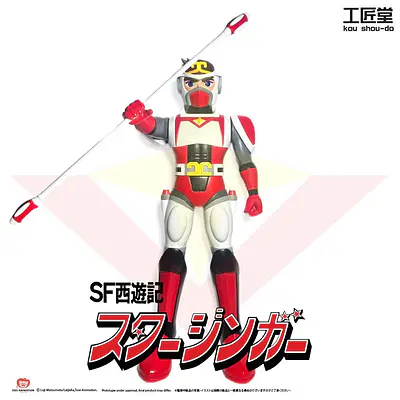
Koushoudo is represented by Jan Kugo from Starzinger in Mega Sofubi form at 37 cm. Sofubi is soft vinyl, so the appeal here is the sculpt and the size rather than articulation. UK delivery is free.
Collector's Guide
Product Lines
The Koushoudo range at Zero Variant features the Starzinger Jan Kugo Mega Sofubi Figure, a large-format piece standing approximately 37 cm tall. Jan Kugo is Starzinger's answer to Son Goku, the hot-headed cyborg guardian of Princess Aurora, famed as the wildest fighter in the solar system. This gigantified interpretation renders him in bold retro styling, with hollow soft vinyl construction and hand-finished paintwork true to the sofubi format. Made to order in limited production, it is tall enough to anchor a shelf of standard-sized figures around it.
Why Collectors Rate Them
Sofubi collecting values different things from mainstream figure collecting: character, craft and the trace of the human hand. Koushoudo's choice of subject reaches back to a 1978 Toei hero. The Mega format is larger than standard sofubi releases. Sofubi is traditionally a hand-finished format, so minor paint variation can occur and is widely considered part of its charm.
Koushoudo Collectibles at Zero Variant
Our Koushoudo figure is a large sofubi piece that needs careful handling, so we dispatch from the UK with packing chosen to protect soft vinyl in transit.
FAQs
What is a sofubi figure?
Sofubi is the Japanese term for soft vinyl. Figures are cast hollow in vinyl and typically finished by hand, a production style rooted in vintage Japanese character toys and prized by designer toy collectors.
Who is Jan Kugo?
One of the cyborg guardians who escort Princess Aurora in Starzinger, the 1978 Toei anime known internationally as Spaceketeers. The character is the series' counterpart to Son Goku from Journey to the West.
How large is the Mega Sofubi figure?
It stands approximately 37 cm tall, a substantially larger format than typical sofubi releases and well suited to anchoring a display.
Will every figure look exactly the same?
Not necessarily. Sofubi as a format is typically finished by hand, so minor paint variation is normal and is widely considered part of the charm of collector sofubi.